

Should you wear sunscreen when skiing? Here’s why winter sun exposure matters more than you think
Blue skies, summer holidays, and beach days are when most of us think about sunscreen. Yet, some of the most intense ultraviolet (UV) exposure happens without a sun lounger or swimming pool in sight. It occurs in much colder climes, when you’re surrounded by snow.
The temperature suggests protection is optional, when it’s actually essential. No more so for skiers, as a full day on the slopes presents a unique combination of factors that can increase their risk of burning, accelerate skin damage, all of which contributes to long-term ageing (and the risk of developing skin cancer) if protection is overlooked.
Why skiing increases UV exposure
UV rays get stronger the higher up you go, so for every 1,000 metres of altitude, UV levels increase by around 10 to 12 per cent. In mountain environments, this means exposure rises quickly, even when the sun feels weak or filtered by clouds. High altitudes also have a thinner atmosphere, which means there’s less natural filtering of UV rays, allowing more to reach your skin.
Snow adds another layer of complexity. White surfaces reflect UV radiation extremely efficiently, bouncing rays back towards the skin from below as well as above. This reflected exposure affects areas often missed by sunscreen, including the underside of the chin, the nose, ears, cheeks, lips, hands and the delicate eye area.
Cold temperatures also suppress the skin’s usual warning signs. Without heat, sweating or visible redness, sun damage is less obvious in real time, making it easier to stay exposed for longer than intended.
The result is a setting where UV exposure is intensified, prolonged and frequently underestimated.
The cumulative impact on skin health
Ultraviolet damage does not reset with the seasons. It accumulates gradually, through everyday exposures that rarely feel dramatic enough to register as harmful.
But what’s actually happening when you don’t protect your skin via sunscreen use is quiet alarming. Think, collagen and elastin breakdown that leads to lines, wrinkles, sagging and a leathery texture. Over-production of melanin that triggers hyperpigmentation, as well as damage to your skin cells that causes them to mutate and develop skin cancer.
Common sunscreen mistakes on the slopes
On ski trips, if sunscreen is applied at all, it’s usually done in the morning, and forgotten for the rest of the day. SPF should be reapplied every two hours especially when outdoors as wind, friction from scarves and helmets, all reduce coverage, meaning protection diminishes long before the lifts close.
Another frequent oversight is coverage. “People focus on the face but forget UV exposure on the ears, neck, décolletage and hands,” shares Aesthetic Doctor, Raquel Amado. And with helmets, goggles and layers constantly shifting, these exposed areas require deliberate attention.
How much sunscreen is actually needed?
Quantity is one of the most underestimated factors in effective sun protection, regardless of season.
“There’s a huge misconception that ‘a little goes a long way’ when it comes to sunscreen,” says Aesthetics Expert Dr Emmaline Ashley. “Most people apply far too little, and not enough of the stuff significantly reduces your actual protection, even if you’re using SPF 50,” she adds.
For the face alone, at least two full finger lengths of sunscreen are required. This becomes particularly important when skiing, as partial coverage leaves skin vulnerable to reflected UV from snow.
Is higher SPF necessary when skiing?
Search interest around very high SPF has increased, reflecting greater awareness of sun damage, but the numbers can be misleading without context.
“SPF measures the amount of UVB radiation aka the burning rays of the sun that reach your skin,” explains Cosmetic Doctor, GP Derm and Founder of Dr Nyla Medispa, Dr Nyla. “SPF 50 blocks 98 per cent of UVB rays, SPF 30 blocks 97 per cent, while SPF 15 blocks 93 per cent of UVB rays,” she adds.
Ok, yes, the difference seems incredibly small, but it can matter for people who burn easily, have fair or sensitive skin, or spend extended periods outdoors at altitude in snowy conditions. So, don’t go lower than an SPF 30 on the slops - every little helps!
The reality of skiing and sun protection
Skiing exposes the skin to a combination of high altitude, light reflection and prolonged daylight that makes sunscreen essential. Applied correctly, in the right amount and reapplied consistently, sunscreen remains one of the simplest and most effective ways to protect your skin and your health, even in winter conditions. So, be sure to pack enough Colorescience sunscreens for your next ski trip.
How to pick the best SPF for you
When packing for a ski trip, it’s worth thinking of sunscreen in the same way you think about layers: one reliable base, options for topping up, and targeted protection where skin is most exposed. With the right products on hand, sun protection should become part of your routine.
For long days on the mountain
A lightweight but robust facial sunscreen should form the foundation of your ski holiday suncare routine. Colorescience Sunforgettable Total Protection Face Shield SPF 50, offers broad-spectrum protection against UVA and UVB rays, as well as defence against visible light and infrared radiation, which are intensified at altitude and through snow reflection. Its comfortable, skincare-like texture makes it suitable for daily wear in cold conditions, without feeling heavy or sticky.
For tone correction
For skiers concerned about pigmentation, redness or uneven tone, Colorescience Sunforgettable Total Protection Face Shield Flex SPF 50, provides the same high-level mineral protection with the added benefit of adaptable tint.
For shine control
Those who sweat easily when active, and have oily or combination skin, the Colorescience Sunforgettable Total Protection Face Shield Matte SPF 50 is ideal. Its oil-absorbing finish helps maintain grip on the skin throughout the day.
For reapplication
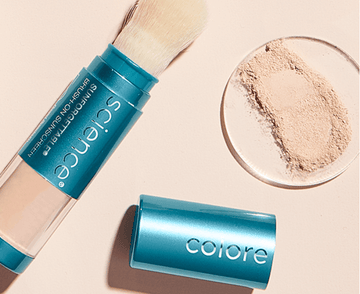
Reapplying sunscreen while skiing can feel impractical, but it’s essential. Cue, the Colorescience Sunforgettable Total Protection Brush-On Shield SPF 50. It’s powder formula makes reapplication easy and it’s ultra-portable.
For delicate areas
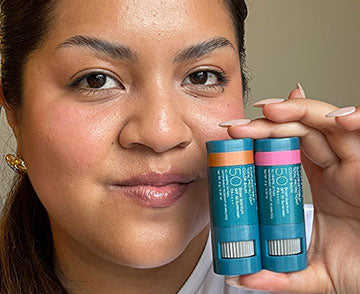
The skin around the eyes and our lips are especially vulnerable to reflected UV from snow due to the fact that the skin is thinner in these areas, lacks oil and protective melanin. Colorescience Total Eye 3-in-1 Renewal Therapy SPF 35 provides sun protection while helping to address dehydration caused by cold air and wind. While the Colorescience Sunforgettable Total Protection Sport Stick SPF 50, looks after lips to ensure they don’t burn.