

Should You Wear Sunscreen Every Day?
Yes, must of us know we should wear sunscreen when it’s sunny out, but many of us are still unaware that sunscreen should really be worn all year round. It’s that lack of knowledge that leads us to reserve SPF for holidays, heatwaves, or particularly sunny days, rather than something we reach for every single day. But when you look at what daily UV exposure is actually doing to the skin, you’ll likely find that the case for wearing sunscreen every day becomes much harder to ignore.
Why daily sunscreen matters
UV radiation is one of the main causes of premature skin ageing. You won’t necessarily notice the damage after one unprotected short walk, but the damage UV exposure causes accumulates and over time it will be hard to ignore the hyperpigmentation, lines, wrinkles and dullness.
“Skin damage from UV exposure is largely irreversible, and there is no such thing as ‘building a tolerance’ to UV radiation,” explains Kimberley Medd, Clinic Lead at Face the Future. And ageing isn’t the only concern as, “childhood sunburns are a well-known risk factor for developing skin cancer later in life,” adds Medd.
Broad-spectrum SPF is key
If you’re wearing sunscreen every day, the type you choose matters. A broad-spectrum SPF 30 or higher is considered the baseline, as this ensures protection against both UVA and UVB rays.
UVA rays, which penetrate deeper into the skin, are responsible for collagen breakdown, oxidative stress and long-term structural changes in the skin. Unlike UVB rays, they are present year-round, and can pass through clouds and even glass.
“Sunscreen needs to be reapplied liberally and frequently,” says Medd. “Particularly when on holiday, follow the rule of applying SPF 20–30 minutes before sun exposure and reapply every two hours, or after swimming or sweating.”
While reapplication is often associated with beach days, it’s just as important during prolonged daily exposure, especially if you’re spending time outdoors, driving, or sitting near a window.
Is sunscreen safe to use every day?
Misinformation around sunscreen safety has become increasingly common, particularly online. However, in reality, this narrative doesn’t reflect the scientific consensus. “Modern sunscreens, particularly those approved in the UK, EU, and US, go through rigorous safety testing, and the vast majority of dermatologists consider regulated sunscreen ingredients safe and essential,” says Medd.
They also don’t have a negative impact on vitamin D production, which is another argument against daily sunscreen use that’s floating around the internet. Yes, sunlight does play a role in vitamin D production, but the reality is more nuanced.
“Moderate sun exposure helps with vitamin D production and well-being, particularly in the mornings or late afternoons,” explains Medd. “However, this should be balanced with adequate protection, as short periods of incidental sun exposure are usually sufficient for vitamin D synthesis. Consistently skipping sunscreen in the hope of boosting levels often leads to more harm than good, particularly when you consider the long-term effects of unprotected UV exposure,” adds Medd.
Are we wearing sunscreen correctly?
Even among those who do use sunscreen, application habits tend to fall short. According to data from a Face the Future SPF survey, daily use is far from consistent.
“We found that almost half of the UK (45%) do not apply SPF daily or most days,” says Medd. “Only 18% apply SPF to their hands daily, and just 12% apply it to their chest.”
It’s a reminder that sunscreen isn’t just about the face. Areas like the neck, chest and hands are often exposed and among the first to show signs of ageing, yet they’re frequently overlooked.
Does everyone need to wear sunscreen every day?
There’s still a persistent belief that darker skin tones don’t require sunscreen, but this is another misconception. “While melanin does provide some natural protection against UV-induced burning, it doesn’t prevent DNA damage or the long-term effects of sun exposure,” reveals Medd.
This means that all skin tones including Black and brown skin can develop hyperpigmentation, and lose collagen and elastin if they’re not protected by way of an SPF every day.
Ultimately, your sunscreen use shouldn’t be determined by the weather. If it’s light outside UV is present and you need to protect your skin from both UVA and UVB. Consistent and daily sunscreen wear is the best way to do that if you want to preserve your collagen and elastin stores, and sport a even toned complexion for longer.
How to pick the best SPF for you
While we should all be wearing sunscreen on a daily basis, which sunscreen depends on your skin type and concerns.
For screen and sun exposure
Colorescience Sunforgettable Total Protection Face Shield SPF 50, offers broad-spectrum protection against UVA and UVB rays, as well as defence against visible light and infrared radiation. That latter matters for anyone who spends lots of time at a screen, as they emit high-energy visible light, also known as blue light, which can contribute to oxidative stress and pigmentation with prolonged exposure. So, whether you're at your desk or out in the sun, this formula has you covered.
For tone correction
Concerned about pigmentation, redness or uneven tone? Colorescience Sunforgettable Total Protection Face Shield Flex SPF 50, provides the same high-level mineral protection with the added benefit of adaptable tint.
For shine control
Those who sweat easily when active, and have oily or combination skin, should opt for the Colorescience Sunforgettable Total Protection Face Shield Matte SPF 50. Its oil-absorbing finish helps maintain grip on the skin throughout the day.
For reapplication
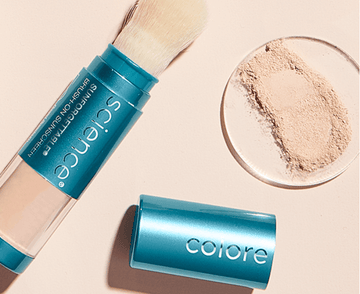
Reapplying sunscreen throughout the day is essential, what if you’re wearing make-up. Cue,the Colorescience Sunforgettable Total Protection Brush-On Shield SPF 50. It’s powder formula makes reapplication easy and it’s ultra-portable.
For delicate areas
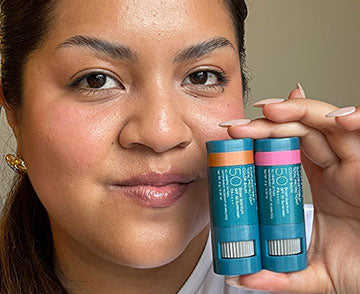
The skin around the eyes and our lips are especially vulnerable to UV due to the fact that the skin is thinner in these areas, lacks oil and protective melanin. Colorescience Total Eye 3-in-1 Renewal Therapy SPF 35 provides sun protection while helping to address dehydration from cold wind and central heating in the winter and moisture sapping temperatures over the summer months. While the Colorescience Sunforgettable Total Protection Sport Stick SPF 50, looks after lips to ensure they don’t burn.